

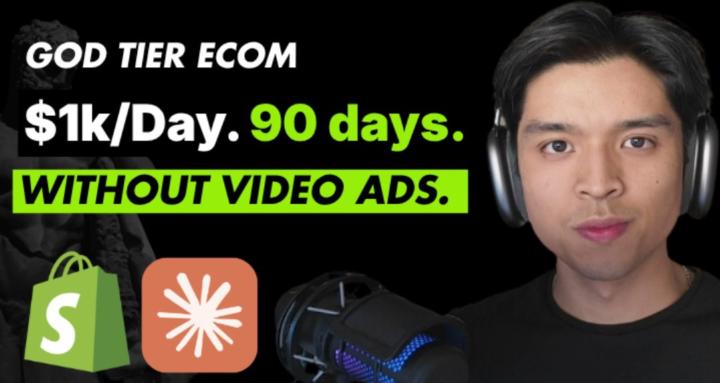


God Tier Ecom – Anthony Camacho Review: An Honest, In-Depth Breakdown of the High-Ticket Dropshipping Blueprint
The e-commerce landscape has shifted dramatically over the past few years. The days of throwing up a generic one-product store with a cheap gadget from AliExpress and watching Facebook ads print money are largely behind us. Today, rising customer acquisition costs, stricter ad platform algorithms, and savvier consumers demand a more sophisticated, brand-centric approach to online retail. This shift is precisely what sets the stage for our comprehensive evaluation of God Tier Ecom – Anthony Camacho, a training program built around high-ticket dropshipping and sustainable e-commerce brand building.
For aspiring entrepreneurs and seasoned store owners alike, choosing the right mentorship program is a major financial and time commitment. In this detailed review, we examine the curriculum, operational frameworks, strengths, limitations, and real-world viability of this system to help you decide if it aligns with your business goals.
What Is This E-Commerce Program All About?
At its core, this training ecosystem moves away from the traditional “low-ticket impulse buy” model and focuses heavily on high-ticket dropshipping—selling established, higher-priced products (typically ranging from $500 to $5,000+) by partnering directly with authorized domestic suppliers and manufacturers.
Rather than relying on overseas shipping times that frustrate buyers and trigger payment processor holds, the methodology emphasizes building authorized dealer relationships with reputable brands. When a customer places an order on your storefront, you purchase the item at wholesale pricing from the brand or distributor, and they ship it directly to the buyer’s doorstep from a domestic warehouse.
The primary appeal of this business model lies in its unit economics. Selling a $2,000 piece of commercial equipment, luxury home fixture, or outdoor gear at a 25% to 35% gross margin yields $500 to $700 in profit per transaction. Compare that to selling a $30 novelty item where you might net $8 after ad spend, and the operational leverage becomes immediately clear.
Who Is Anthony Camacho?
Before investing in any business education, it is critical to evaluate the practitioner behind the framework. Anthony Camacho has established a reputation in the digital commerce space as a focused e-commerce operator who transitioned from struggling with saturated low-ticket models into scaling profitable high-ticket storefronts.
Unlike many internet marketers who rely exclusively on flashy lifestyle marketing, his teaching style leans heavily toward standard operating procedures (SOPs), conversion rate optimization, supplier negotiation scripts, and search-intent traffic acquisition. His approach treats an online store not as a temporary “get-rich-quick” funnel, but as a legitimate digital retail asset capable of generating consistent monthly cash flow and eventual exit value.
Core Curriculum and Module Breakdown
To give you a clear picture of what awaits inside the member portal, here is a structured breakdown of the core training pillars and operational workflows covered in the curriculum.
1. Niche Selection and Market Validation
Most beginners fail before they even launch because they pick niches based on personal passion rather than buyer intent and margin viability. The first phase of the training introduces strict quantitative criteria for niche discovery:
-
Price Point Filtering: Identifying categories where average order values (AOV) naturally sit above $800, ensuring enough margin buffer to absorb paid traffic costs.
-
Non-Seasonal Demand: Avoiding hyper-seasonal fads in favor of evergreen commercial, industrial, home improvement, or specialty hobbyist equipment.
-
Supplier Density: Ensuring a niche has at least 15 to 30 independent brands or manufacturers rather than being monopolized by one or two massive corporations that refuse third-party online retailers.
-
Search Volume Analysis: Using keyword research tools to verify that buyers are actively searching for specific product models and brand names on search engines.
2. High-Converting Store Architecture and Branding
When a customer prepares to spend $1,500 or more on a website they have never heard of, trust is the single biggest barrier to conversion. The storefront module walks through building clean, authoritative niche superstores or specialized boutiques:
-
Theme Customization and UX: Structuring navigation menus, collection filters, and product pages so buyers can effortlessly compare technical specifications.
-
Trust Signals and Authority: Implementing clear warranty policies, financing options (such as Affirm or Klarna), live chat support, and phone numbers to reassure high-intent buyers.
-
Copywriting for High-Ticket Buyers: Moving away from hype-driven sales copy toward technical accuracy, clear shipping timelines, and buyer guides that answer pre-purchase objections.
3. Supplier Outreach and Authorized Dealer Approval
Securing accounts with legitimate brands is often the most intimidating hurdle for newcomers. Suppliers want to protect their brand equity and avoid working with amateur websites that violate Minimum Advertised Price (MAP) policies. This section provides actionable templates and negotiation frameworks:
-
Professional Positioning: How to present your business entity, website, and marketing plan so manufacturers view you as a value-adding retail partner rather than just another dropshipper.
-
Cold Outreach Sequences: Email templates and phone call scripts designed to bypass gatekeepers and reach wholesale account managers.
-
Handling Objections: Proven responses when a brand asks about brick-and-mortar locations, initial minimum order quantities, or existing sales volume.
4. High-Intent Traffic Acquisition (Google Ads & Shopping)
While low-ticket dropshipping relies heavily on interruptive social media ads (TikTok, Instagram, Facebook) to spark impulse purchases, high-ticket retail thrives on capture-intent marketing. People rarely impulse-buy a $2,500 sauna or commercial espresso machine while scrolling social feeds; instead, they go to Google when they are ready to pull out their credit card.
-
Google Shopping Campaigns: Structuring product feeds, optimizing titles with high-converting attributes (brand, model number, size, material), and segmenting campaigns by margin or return on ad spend (ROAS).
-
Search Campaigns and Keyword Tiering: Capturing bottom-of-funnel traffic searching for exact product SKUs and brand names while filtering out wasteful broad-match clicks using negative keyword lists.
-
Retargeting and Abandoned Cart Recovery: Setting up multi-channel follow-up sequences via email and display ads to recover undecided shoppers.
5. Operations, Fulfillment, and Customer Service
Closing the sale is only half the battle. Managing high-value orders requires tight operational discipline to prevent chargebacks, freight damage disputes, and supplier delays:
-
Freight Shipping Logistics: Understanding LTL (Less-Than-Truckload) freight, liftgate delivery options, and customer inspection protocols upon delivery.
-
Order Processing SOPs: Automating order routing to suppliers, tracking invoice reconciliations, and updating customers proactively at every milestone.
-
Hiring and Delegation: Guidance on bringing in virtual assistants (VAs) to handle routine product uploads, price updates, and tier-one customer inquiries once revenue scales.
Key Strengths vs. Realistic Limitations
Every business model and training program carries distinct advantages alongside practical trade-offs. Evaluating both sides objectively ensures you enter with realistic expectations.
| Evaluation Criteria | Strengths & Advantages | Limitations & Challenges |
| Profit Margins | High dollar profit per order ($300–$1,000+ net) allows faster scaling without needing thousands of daily orders. | Percentage margins (20%–35%) can be tighter than private-label brands due to MAP pricing restrictions. |
| Traffic Quality | Google Shopping and Search capture buyers actively looking to purchase, reducing creative fatigue. | Cost-per-click (CPC) in competitive niches can be expensive, requiring disciplined bid management. |
| Supplier Reliability | Domestic warehouses ensure 3–7 day delivery times and vastly lower refund/chargeback rates. | Getting approved by top-tier brands takes persistence, phone calls, and professional presentation. |
| Asset Value | Authorized dealer stores with recurring supplier contracts can be sold for attractive multiples on marketplaces. | Requires proper business registration (LLC, EIN, resale certificate) before launching operations. |
How Does It Compare to Other E-Commerce Models?
To understand where this blueprint fits in the broader digital business ecosystem, it helps to contrast it against the two most common alternatives:
-
Versus Traditional Low-Ticket Dropshipping: Low-ticket stores require constant video ad creation, suffer from rapid ad fatigue, and frequently run into payment processor freezes due to slow international shipping. High-ticket domestic dropshipping eliminates overseas transit headaches and relies on steady search traffic rather than viral video hooks, though it requires more upfront professionalism during supplier outreach.
-
Versus Amazon FBA / Private Label: Launching a private label brand on Amazon demands thousands of dollars in upfront inventory purchases, custom packaging, and freight forwarding before you ever validate whether customers want the product. With the authorized high-ticket model, you validate demand using existing brand-name products without holding a single dollar of unsold inventory in a warehouse.
Financial Investment Required Beyond the Course
One common mistake new entrepreneurs make is spending their entire budget on education while leaving zero capital for actual business operations. To execute the strategies taught inside this program smoothly, you should plan for the following baseline expenses:
-
Business Formation & Compliance ($150 – $500): Registering an LLC, obtaining a free EIN, and securing a state sales tax permit/resale certificate (mandatory for opening wholesale accounts).
-
E-Commerce Platform & Apps ($50 – $150/month): Shopify subscription, a clean conversion-focused theme, and essential apps for feed management, live chat, and email marketing.
-
Initial Paid Traffic Budget ($1,000 – $2,500): While you do not spend money on bulk inventory, you need working capital to test Google Shopping campaigns, gather conversion data, and optimize product feeds over your first 30 to 60 days.
-
Working Capital / Credit Line: Because payment processors (like Stripe or Shopify Payments) occasionally hold funds for a few days on new accounts while suppliers require immediate payment upon order fulfillment, having a business credit card with a decent limit makes cash flow management seamless.
Who Is This Program Best Suited For?
This training is an ideal fit if you:
-
Want to build a legitimate, long-term e-commerce retail business rather than chasing short-lived social media trends.
-
Are comfortable picking up the phone and communicating professionally with domestic suppliers and B2B account managers.
-
Prefer data-driven marketing (Google Ads, feed optimization, conversion metrics) over filming daily short-form social videos.
-
Have a realistic starting budget to cover business registration, software tools, and initial ad testing.
You should probably skip this if you:
-
Are looking for a “push-button” automated income stream that requires zero work or outreach.
-
Have less than $500 total to invest across both your education and your store’s operating expenses.
-
Refuse to register a formal business entity or handle basic customer service and supplier communications.
Final Verdict
God Tier Ecom – Anthony Camacho offers a structured, practical roadmap for entrepreneurs ready to graduate from fragile, low-margin online selling to high-ticket domestic e-commerce. By focusing on established brand partnerships, buyer-intent search traffic, and strict operational SOPs, the methodology addresses the exact vulnerabilities that cause most standard dropshipping stores to fail.
Success with this system still demands real execution—you will need to build a trustworthy storefront, make outreach calls to secure supplier accounts, and manage your ad spend carefully. However, for action-takers willing to treat online retail like a real business, the frameworks provided deliver a clear, repeatable blueprint for building a profitable digital asset.
Be the first to review “God Tier Ecom – Anthony Camacho (November 2026)”
Related products
Uncategorized

Uncategorized

Uncategorized
Uncategorized

Uncategorized


Uncategorized
Reviews
There are no reviews yet.