

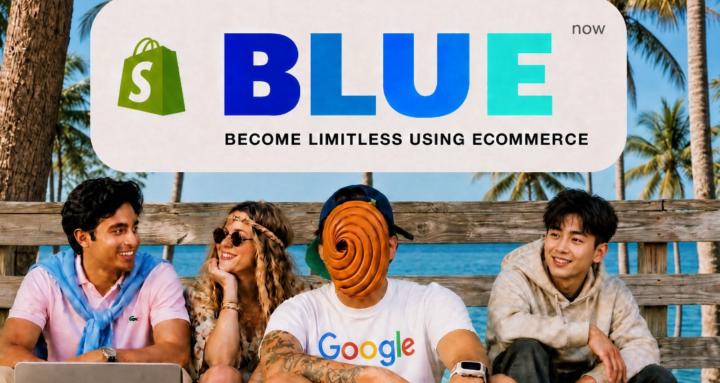

Tobi Runs Ads – Blue Ocean Dropshipping Review: Can Google Ads Change Your E-commerce Game?
The e-commerce landscape is shifting faster than ever. For years, beginners and intermediate store owners alike treated Meta (Facebook and Instagram) and TikTok ads as the undisputed holy grail of customer acquisition. However, rising ad costs, creative fatigue, strict ad account bans, and hyper-saturated targeting have made scaling on social platforms an uphill battle, especially for newcomers with limited capital.
Enter the alternative traffic source that has been dominating discussions across e-commerce circles: Google Ads. Leading this charge is a creator known as Tobi Runs Ads, whose flagship community and training program, Tobi Runs Ads – Blue Ocean Dropshipping, has attracted hundreds of entrepreneurs looking for a different path to profitability.
If you are wondering whether this program lives up to the hype, what is actually inside the curriculum, and whether Google Ads dropshipping is right for your business model, this comprehensive, unbiased review breaks down everything you need to know before joining.
Introduction: The Shift from Meta Ads to Google Ads in Modern Dropshipping
To understand why a program focused purely on Google Ads has gained massive traction, you first need to understand the structural changes happening in digital advertising. Social media ad platforms rely heavily on interruption marketing. Users are scrolling through memes, Reels, or TikTok videos, and your product ad interrupts their experience. While this can work wonders for impulse-buy products, it requires exceptional video editing, endless creative testing, and deep pockets to survive ad account restrictions.
Google Ads, on the other hand, operates on intent. When someone types a specific product query or high-intent commercial keyword into Google Search or Google Shopping, they are already looking to buy. They have bottom-of-funnel purchase intent.
Proponents of this strategy argue that capturing existing demand rather than manufacturing it through viral videos results in cleaner scaling, higher conversion rates, and dramatically fewer ad account shutdowns. Tobi Runs Ads – Blue Ocean Dropshipping was built specifically around this premise: teaching online entrepreneurs how to bypass social media creative fatigue by mastering Google Search, Google Shopping, and Google Merchant Center compliance.
Who Is Tobi Runs Ads and What Is Blue Ocean Dropshipping?
Tobi Runs Ads (operational online as @TobiRunsAds) has carved out a distinct niche for himself as a specialist in Google Ads execution for e-commerce and Shopify stores. Rather than recycling generic dropshipping strategies from 2020, his content focuses heavily on the technical machinery behind profitable e-commerce: setting up resilient Shopify stores, managing Google Merchant Center (GMC) suspensions, leveraging AI tools for operational efficiency, and scaling campaigns with high return on ad spend (ROAS).
The term “Blue Ocean” in business strategy refers to uncontested market space—finding areas where competition is minimal or non-existent, as opposed to a “Red Ocean” where everyone is fighting over the same crowded pool of customers. In the context of this program, the Blue Ocean strategy applies to finding untapped product angles, leveraging Google’s less-saturated placement options, and utilizing structural ad setups that most traditional dropshippers overlook.
Hosted on the Skool platform, the Blue Ocean Dropshipping community functions as an interactive hub combining structured educational modules, peer-to-peer networking, and direct access to mentorship.
Inside the Curriculum: What Do You Actually Get?
When you enroll in the program, you gain access to a structured environment designed to take a complete beginner or struggling store owner through the mechanics of Google-driven e-commerce. The core curriculum is broken down into over 100 video modules and backend blueprints covering several essential pillars:
1. The Foundation: Store Setup and Product Research
Before spending a single dollar on Google Ads, your store needs to convert traffic. The training covers how to build clean, professional, high-trust Shopify storefronts that align with Google’s strict quality guidelines. Product research within the program departs from standard social media product-hunting methods; instead, it focuses on identifying items with high search volume, healthy profit margins, and strong buyer intent.
2. Mastering Google Merchant Center (GMC) and Compliance
One of the biggest roadblocks dropshippers face on Google is getting their Merchant Center accounts suspended for “misrepresentation” or policy violations. This is where many independent operators fail. The course dedicates a massive portion of its content to GMC setup, compliance, handling suspensions, managing RDRs (Response/Risk Data & chargebacks), and structuring your backend to keep ad accounts healthy and active.
3. Google Search and Shopping Ad Campaigns
This is the core engine of the program. Students are walked through step-by-step instructions on how to structure Google Shopping campaigns, Performance Max (PMax) campaigns, and Search campaigns. Unlike Meta ads, where creative testing dictates success, Google Ads success relies heavily on proper feed optimization, negative keyword filtering, bidding strategies, and data structure.
4. Scaling and Automation
Once a campaign turns a profit, scaling becomes the primary objective. The program explores how to scale budgets effectively without breaking your cost-per-acquisition (CPA), how to expand into international markets, and how to integrate AI tools to automate repetitive store management tasks.
The Core Philosophy: Why the “Blue Ocean” Approach Matters
The philosophy taught in Tobi Runs Ads – Blue Ocean Dropshipping centers on sustainability and risk mitigation. Traditional dropshipping models often leave beginners burned out due to volatile CPMs on TikTok and Facebook. If your creative fails, your ad spend vanishes instantly.
Google Ads offers a steadier baseline because traffic is dictated by search volume trends. By positioning products where consumers are actively searching with credit cards in hand, store owners can achieve healthier profit margins. Furthermore, the course emphasizes building real e-commerce assets—stores that can eventually be branded, stabilized, and even prepped for a six-figure exit, rather than relying on quick-buck product trends that die out in a week.
Community, Mentorship, and Direct Support
An online course is only as good as the support system backing it up. Many digital marketing programs sell static videos and leave students stranded when they encounter technical issues.
The Blue Ocean Dropshipping community utilizes a subscription-based model on Skool, which fosters daily engagement. Key community features include:
-
Direct Direct Message Access: Members get lines of communication for troubleshooting specific roadblocks.
-
Bi-Weekly Group Coaching Calls: Live sessions where campaigns, store teardowns, and strategic adjustments are reviewed.
-
Active Peer Network: A dedicated Discord and Skool feed where members share wins, ask questions, and collaborate on problem-solving.
-
Media Buyer & Agency Access: Insights from active media buyers who manage high-spend accounts daily.
Having access to real-time feedback is crucial in e-commerce, where a single broken tracking pixel or a sudden account policy flag can halt your revenue overnight.
Pricing Structure and Membership Breakdown
The program is structured as an ongoing community membership rather than a static multi-thousand-dollar masterclass.
-
Base Membership Cost: Priced dynamically, with standard introductory rates sitting around $97/month.
-
Value Proposition: Compared to high-ticket mastermind programs that charge upwards of $5,000 upfront with no guarantee of ongoing updates, a lower-barrier monthly community model allows members to test the waters, consume the material, and cancel if it does not fit their workflow.
-
Price Scaling: Membership rates are subject to increase as the community size grows and new modules are added, though early subscribers often lock in their rate for the duration of their active membership.
Pros and Cons of Joining Blue Ocean Dropshipping
To make an objective decision, it is essential to weigh the strengths and weaknesses of the program realistically.
The Pros:
-
Alternative Traffic Source: Teaches Google Ads execution, which is vastly different from saturated social media ad networks.
-
Solves Real Technical Hurdles: Heavy focus on Google Merchant Center approvals and avoiding policy bans.
-
Active Community and Mentorship: Regular group coaching calls and direct engagement prevent you from feeling lost.
-
Cost-Effective Entry: Lower monthly subscription fee compared to traditional high-ticket e-commerce coaching programs.
-
Constantly Updated: Content is regularly refreshed to adapt to algorithm changes in the e-commerce ecosystem.
The Cons:
-
Requires Capital Beyond the Course: You must have a dedicated budget for Shopify subscriptions, apps, product inventory/samples (if applicable), and ad spend.
-
Technical Learning Curve: Google Ads and Merchant Center have a steeper initial technical learning curve than simply boosting a post on Instagram.
-
Not a Get-Rich-Quick Scheme: Success requires patience, meticulous data analysis, and consistent execution. It will not print money automatically without work.
Is It Right for You? Final Verdict and Recommendations
E-commerce is an execution game. No course or community can hand you success without effort. However, if you are tired of burning money on Meta and TikTok ads, struggling with creative burnout, or constantly dealing with unpredictable ad account bans, expanding your skillset into Google Ads is a smart strategic pivot.
Tobi Runs Ads – Blue Ocean Dropshipping provides a structured, highly tactical roadmap for anyone looking to master Google-driven e-commerce. It cuts through the fluff and focuses heavily on the backend compliance and search-intent strategies that separate profitable stores from failed experiments.
If you have a modest starting capital, are willing to learn a technical ad platform, and want a supportive community to guide you past common pitfalls, joining the program is a solid, practical investment in your digital marketing education.
Be the first to review “Tobi Runs Ads – Blue Ocean Dropshipping”
Related products
Uncategorized


Uncategorized
Uncategorized

Uncategorized


Uncategorized
Reviews
There are no reviews yet.