

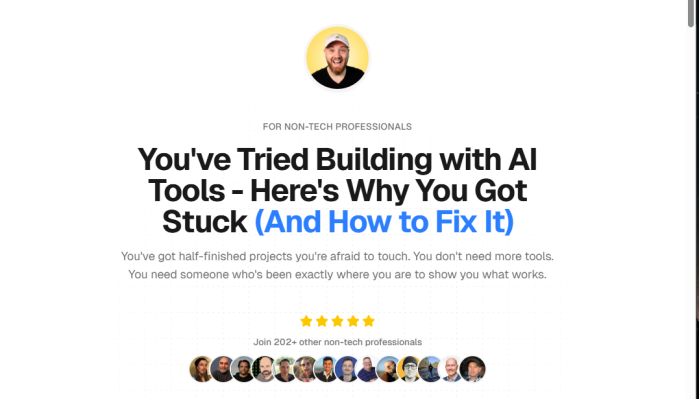


Robin Ebers – AI Coding Blueprint V2 2025: An Honest, In-Depth Review
Artificial intelligence has fundamentally changed the landscape of software engineering and web development. What used to take developers weeks to build, debug, and optimize can now be executed in a fraction of the time with the right automated workflows. However, leveraging artificial intelligence in code generation requires far more than typing generic prompts into a chat interface. It demands structured systems, context management, precise prompting, and intelligent automation.
Among the various programs claiming to teach these modern techniques, Robin Ebers – AI Coding Blueprint V2 2025 has emerged as a widely discussed curriculum designed to help developers and creators accelerate their development output.
In this comprehensive review, we examine what the course covers, how its frameworks hold up in real-world applications, who stands to benefit the most, and whether it lives up to the expectations of today’s fast-moving software landscape.
What Is the AI Coding Blueprint V2 2025?
The course is a practical, system-driven training program crafted by Robin Ebers to teach modern software engineering techniques using advanced artificial intelligence tools. Rather than focusing merely on theory or superficial demonstrations, this updated second version emphasizes actionable, end-to-end workflows that transform how code is planned, written, tested, and deployed.
The primary objective of the curriculum is to help learners build complex applications, automate repetitive development tasks, and eliminate tedious manual debugging. It covers everything from setup and environment configuration to advanced context feeding and multi-step prompt chaining.
Key Objectives of the Program
-
Accelerate Output: Drastically reduce the time required to turn concept ideas into fully functioning software.
-
Master Modern Tools: Gain hands-on mastery over leading automated assistants, extensions, and automated command-line interfaces.
-
Standardize Code Quality: Maintain high standards of security, scalability, and code cleanliness when generating automated scripts.
-
Optimize Context Windows: Learn advanced techniques for feeding technical documentation and codebase context into large language models without hitting tokens limits or hallucinations.
Core Modules & Curriculum Breakdown
The program is organized logically, taking students from foundational setup concepts to high-level system architecture and deployment strategies. Here is a closer look at what each core section offers.
1. Modern Tools & Environment Setup
The initial module focuses on establishing a high-efficiency development environment. Instead of relying solely on default chat interfaces, the curriculum guides students through configuring powerful code editors, specialized IDE plugins, and command-line automated agents. Setting up key-bindings, custom system rules, and global configurations ensures seamless integration between your editor and intelligent tools.
2. Context Feeding & Repository Architecture
One of the main challenges software creators face when using automated assistants is context loss—where the system forgets previous instructions or generates incompatible code. This module focuses heavily on context engineering. Students learn how to:
-
Generate clean repository maps (
.promptingfiles, architecture summaries). -
Provide exact API schemas and documentation directly into prompt pipelines.
-
Prevent hallucinations through clear constraint definitions and structural guidelines.
3. Prompt Engineering for Full-Stack Architecture
Moving beyond simple single-line instructions, this module teaches prompt chaining and multi-stage logic. You learn how to write detailed specifications (PRDs – Product Requirement Documents) that enable artificial intelligence models to architect robust backend logic, structure database schemas, and generate clean, responsive frontend user interfaces.
4. Automated Testing, Debugging, & Refactoring
Generating code is only half the battle; ensuring it functions reliably is critical. This section details systematic methods for automated unit testing, bug hunting, and code refactoring. Learners discover how to feed stack traces and error logs into automated models to receive immediate, accurate bug fixes and performance optimizations.
5. Building & Deploying Real-World Applications
The final section ties every concept together through real-world build-alongs. Students observe step-by-step processes for building scalable web applications, custom microservices, and API integrations from scratch, taking them from zero lines of code to a live production environment.
Key Features That Set Version 2 Apart
Version 2 builds upon the original foundational concepts by integrating updated models, refined workflows, and advanced agentic features that have become essential for modern engineering.
Practical Applications: Who Is This Course Built For?
The curriculum is structured to serve a variety of skill levels, though certain profiles will derive maximum value from the training.
For Experienced Developers
Senior software engineers and full-stack developers will find immense value in the advanced workflow optimizations. Rather than spending hours writing repetitive boilerplate code, unit tests, or basic CRUD operations, experienced engineers can use these workflows to act as high-level system architects, overseeing automated code execution.
For Solo Founders & Freelancers
Independent creators, agency owners, and solopreneurs who need to deliver functional products quickly will benefit enormously. The techniques presented allow a single individual to operate with the velocity and technical breadth of a small engineering team.
For Aspiring & Junior Coders
While complete beginners may face a slight learning curve regarding basic programming syntax and command-line familiarity, the structured nature of the blueprint helps beginners bypass months of manual learning by mastering modern, assistant-first development methodologies.
Pros & Cons: An Honest Evaluation
To present a balanced review, it is important to weigh the key advantages against potential limitations.
Advantages (Pros)
-
Highly Actionable: Focuses on practical, real-world application rather than high-level technical jargon or theory.
-
Modern Toolset: Covers cutting-edge tools, editor extensions, and CLI assistants used by top-tier modern tech teams.
-
Time-Saving Frameworks: The included templates, prompt patterns, and configuration files save hours of setup and trial-and-error.
-
Strong Emphasis on Code Quality: Teaches students how to inspect, test, and refactor generated code, avoiding fragile or bug-ridden builds.
Potential Drawbacks (Cons)
-
Requires Basic Technical Literacy: Prior familiarity with basic programming concepts (HTML, JavaScript, APIs) makes absorbing the material much smoother.
-
Evolving Ecosystem: Because modern technology evolves rapidly, students must adapt tools as underlying models and software update over time.
Is It Worth It? Final Verdict
Robin Ebers – AI Coding Blueprint V2 2025 is a standout, practical educational resource that delivers immense value for anyone looking to modernize their software development workflow. By shifting the focus away from basic prompts and toward comprehensive context engineering, spec-driven development, and multi-agent systems, it equips developers with the exact methodologies needed to build fast, scalable, and reliable software today.
If your goal is to boost your development speed, build software products efficiently, and stay ahead of industry shifts, this program provides a proven, highly structured blueprint worth implementing.
Summary Checklist for Prospective Students
-
Prerequisites: Basic knowledge of web technologies and command-line usage recommended.
-
Best For: Full-stack developers, solo builders, freelancers, and software entrepreneurs.
-
Core Takeaway: Transition from writing line-by-line manual code to orchestrating high-speed automated development workflows.
Be the first to review “Robin Ebers – AI Coding Blueprint V2 2025”
Related products

Uncategorized

Uncategorized
Uncategorized
Zakaria Airakaz – Ecom Masterclass (Up to August 2026) – The Complete $100K/Day System
Uncategorized

Uncategorized


Uncategorized

Uncategorized
Reviews
There are no reviews yet.