


Mitchell Tebo – 9×12 Postcard Side Hustle Review: Honest Assessment
Digital advertising costs continue to rise on platforms like Meta and Google, leaving many local business owners struggling to generate positive return on ad spend. At the same time, physical mailboxes remain surprisingly uncrowded compared to cluttered email inboxes. Direct mail boasts high open rates, but the expense of printing and shipping individual mailers often keeps smaller local services from using it.
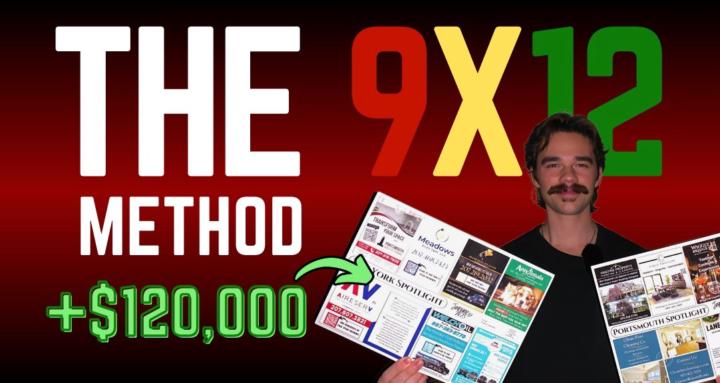
Mitchell Tebo – 9×12 Postcard Side Hustle targets this precise market gap. Built around cooperative direct mail advertising, the program teaches entrepreneurs how to organize, sell, and distribute oversized shared postcards to thousands of local households.
This review provides a thorough analysis of how the business model functions, key training components, notable benefits, potential drawbacks, and an overall verdict.
What Is Mitchell Tebo – 9×12 Postcard Side Hustle?
The program centers on a simple business model: selling advertising slots on a large 9×12-inch physical postcard to non-competing local merchants (such as restaurants, auto repair shops, salons, and home service providers).
Instead of a single business paying $2,000 to $3,000 to print and mail a solo campaign via the United States Postal Service (USPS) Every Door Direct Mail (EDDM) system, 8 to 12 businesses share space on one oversized card. Each merchant pays a fraction of the total cost (typically $400 to $500 per slot). You collect the ad revenue, cover the printing and EDDM postage costs, and keep the remaining profit—often generating $3,000 to $5,000 per completed mailing.
Traditional Direct Mail (Solo):
[Single Merchant] ➔ Pays $2,500 for Printing & Postage ➔ High Expense / Risk

The 9x12 Shared Postcard Model:
[10 Local Merchants] ➔ Pay $500 Each ($5,000 Total Revenue) ➔ Print & EDDM Costs ($1,500) ➔ Net Profit ($3,500)
Key Modules and Core Frameworks
1. Market Selection & Route Mapping
The course outlines criteria for picking viable ZIP codes and target neighborhoods. Students learn how to use demographic filters and USPS route tools to select delivery areas with adequate household density and strong commercial activity.
2. Merchant Prospecting & Cold Outreach
Selling ad space requires reaching out to local business owners. The curriculum provides cold call scripts, walk-in pitch frameworks, email templates, and value propositions that emphasize low-cost market coverage.
3. Ad Design & Formatting
An effective postcard requires clear visual hierarchy and compelling calls to action (such as special offers or QR codes). The training includes layout templates and Canva design guides, as well as options for outsourcing artwork if you prefer not to manage graphic design yourself.
4. Print Logistics & EDDM Distribution
Navigating print specs and postal regulations can be tricky for beginners. The program walks through choosing print partners, formatting files to postal standards, bundling mailers according to USPS guidelines, and dropping off campaigns at local post offices.
Pros: Key Advantages
-
Low Initial Capital Requirements: You do not need to buy inventory or pay for printing upfront. Ad slot payments collected from local businesses cover the printing and postal expenses before the card goes to press.
-
High Per-Campaign Profit Margins: Because multiple advertisers split the production baseline, net margins per completed card are substantial.
-
Clear Value Proposition for Clients: Local businesses get direct physical exposure to 5,000–10,000 nearby homes for a fraction of what a solo direct mailer would cost.
-
Repeat Revenue Potential: Merchants who receive a solid bump in foot traffic or trackable redemptions often renew for future mailings, reducing the need for constant prospecting.
Cons: Important Considerations
-
Requires Active Sales Outreach: This is an active sales business. You must be comfortable picking up the phone, sending cold emails, or walking into local businesses to pitch managers.
-
Local Geographic Limitations: Success depends on having a healthy concentration of local, consumer-facing service businesses nearby. Very small rural areas may lack enough prospective advertisers.
-
Execution Delays: If you struggle to fill the final 2 or 3 ad slots, the mailing schedule gets pushed back, delaying both print delivery and profit distribution.
Comparison: Traditional Agency Services vs. 9×12 Shared Postcard Method
Who Is This Program Best For?
-
Local Hustlers & Sales Professionals: Individuals comfortable with direct communication who want to monetize local business relationships.
-
Freelancers & Agency Owners: Marketers looking to add a tangible, low-friction offline offer to their existing service lineup.
-
Bootstrapped Entrepreneurs: Starters seeking a practical local business model that generates cash flow without heavy software investments or ad spend.
Final Verdict
Mitchell Tebo – 9×12 Postcard Side Hustle offers a practical, structured framework built around a proven offline marketing channel. It bypasses complex ad technology in favor of a straightforward value proposition: helping local businesses reach nearby homes affordably.
While it requires real sales effort and consistent local outreach to fill ad slots, the low overhead costs and attractive profit margins make it a compelling option for anyone looking to build a local direct-mail income stream.
Be the first to review “Mitchell Tebo – 9×12 Postcard Side Hustle (May 2026)”
Related products

Uncategorized

Uncategorized

Uncategorized

Uncategorized
Uncategorized
Uncategorized
Uncategorized

Reviews
There are no reviews yet.