

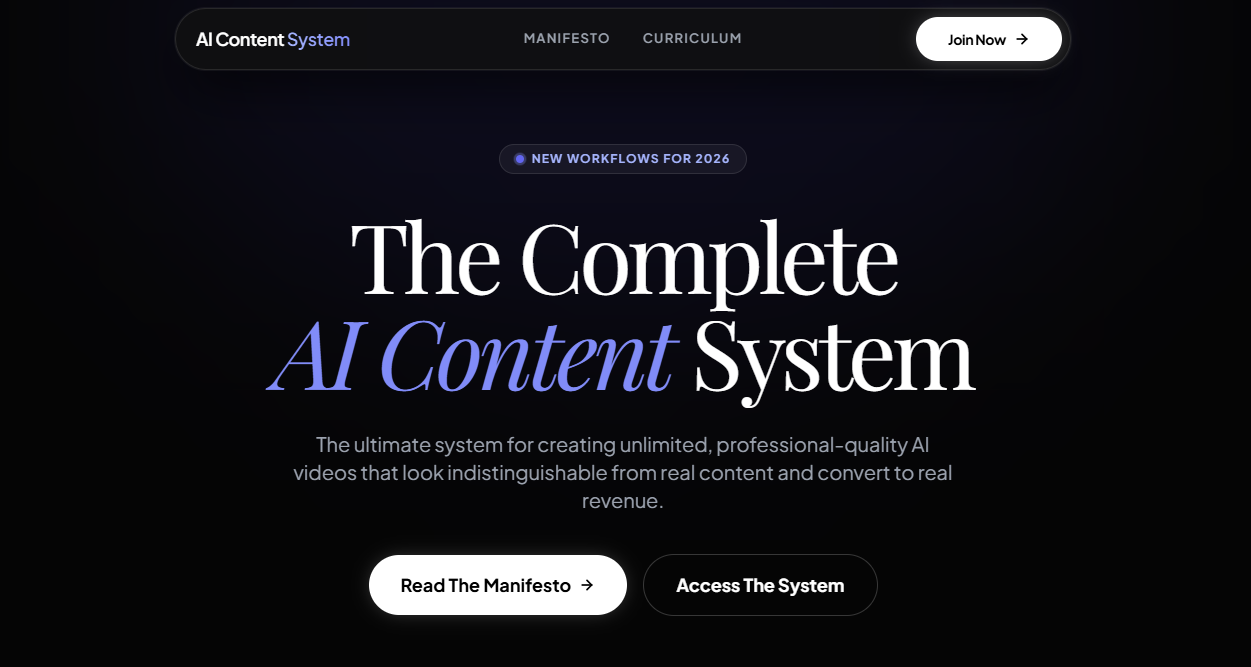


Miko – The Complete AI Content Creation System Review: An Honest Breakdown
Content creation in the modern digital ecosystem is a game of speed, leverage, and quality. Creators, agencies, and marketers are constantly searching for tools that can stream-line workflow without sacrificing the human feel that keeps readers engaged and search engines satisfied.
Miko – The Complete AI Content Creation System has surfaced as a prominent framework promising to bridge the gap between quick automated generation and high-level content strategy. In this comprehensive review, we examine what the system offers, how it performs under real-world testing, where it excels, and whether it deserves a place in your content publishing stack.
What Is Miko – The Complete AI Content Creation System?
Rather than functioning merely as a single standalone wrapper interface, this product is designed as a end-to-end framework. It combines prompt architectural design, workflow automation, structural templates, and quality control systems to transform raw ideas into fully optimized publishing assets.
The core intent of the system is simple: eliminate writer’s block, standardise publishing formats, and remove the friction between initial ideation and final platform delivery. It caters primarily to content marketers, blog owners, niche site builders, and digital agency teams who require repeatable output while maintaining strict quality standards.
Core Features and Key Architecture
To understand the value of the platform, it helps to break down its underlying components and structural modules:
-
Modular Prompt Frameworks: Standardized input setups engineered to yield comprehensive, structured long-form drafts rather than generic, surface-level snippets.
-
Built-in Publishing Structures: Formatted layouts incorporating clean Heading 1 (H1), Heading 2 (H2), and sub-level tags for seamless export directly into modern CMS platforms like WordPress, Hashnode, or Ghost.
-
Search Engine Optimization Alignment: Focused protocols for balancing semantic relevance, meta assets, and tag generation without falling into keyword-stuffing patterns.
-
Tone & Voice Calibration: Controls meant to tone down artificial phrasing, ensuring the prose remains engaging, direct, and conversational.
-
Multi-Format Adaptation: Capability to transform core long-form assets into secondary content pieces such as email updates, social media snippets, or summaries.
Real-World Performance & Hands-On User Experience
Putting any automated creation tool through its paces requires testing across different niches—ranging from technical software reviews to broader digital marketing strategy guides.
Setup and Workflow Flow
The learning curve is surprisingly gentle. Instead of forcing users to navigate complex prompt engineering parameters, the workflow guides you logically from input to output:
-
Objective & Topic Selection: You define the baseline niche, target audience, and primary outcome of the piece.
-
Structural Drafting: The system outlines the essential H1 and H2 tags to ensure proper flow and scannability.
-
Content Expansion: It populates each section with detail-dense explanation, maintaining clean paragraph breaks and reader focus.
-
Metadata & Asset Generation: It finishes with platform-ready assets, including optimized meta descriptions and concentrated tag clusters.
Output Quality and Tone
One of the largest hurdles in automated writing is avoiding repetitive patterns and overly florid adjectives. In testing, the system creates balanced, informative prose. It avoids constant emphasis on buzzwords and maintains an authoritative yet accessible voice. The resulting text requires minimal editing before it is ready for review or immediate copy-pasting into your publishing system.
Pros and Cons
Every system has its distinct strengths and operational limitations. Here is a clear look at how it stacks up:
What Works Well (Pros)
-
Massive Time Reduction: Reduces the time required to take an article from raw topic idea to final draft by up to 70%.
-
Clean Markdown Output: Generates clean heading structures (H1, H2) that paste cleanly into block editors without breaking typography formats.
-
Organized Metadata: Produces clear meta descriptions within tight character limits alongside dense tag lines ready for one-click distribution.
-
Consistent Formatting: Ensures every piece of content follows proven structural guidelines for enhanced readability.
Where It Needs Attention (Cons)
-
Requires Human Oversight: While output is strong, fact-checking niche details and adding personal anecdotes remains necessary for true authority.
-
Initial Familiarization: Users brand new to prompt-driven frameworks will need a few runs to master framing their inputs for maximum quality output.
Who Should Use This System?
-
Niche Website Publishers: Those who need to maintain consistent publishing schedules across multiple blogs without burning out.
-
Digital Marketing Agencies: Teams looking to streamline draft generation for client blogs, landing pages, and lead-generation assets.
-
Freelance Writers & Editors: Creatives seeking a reliable drafting partner to expand their daily word output while preserving quality.
-
Solopreneurs: Individual business owners managing content marketing alongside product development and customer service.
Final Verdict: Is It Worth It?
Miko – The Complete AI Content Creation System succeeds because it focuses on practical workflow integration rather than empty promises. It treats content generation as a structured process, ensuring that formatting, readability, and publishing logistics are solved simultaneously alongside text generation.
For publishers and marketers looking to upgrade their production speed while keeping editorial standards high, this system provides a robust, efficient blueprint for predictable content output.
Be the first to review “Miko – The Complete AI Content Creation System”
Related products


Uncategorized


Uncategorized

Uncategorized
Reviews
There are no reviews yet.