

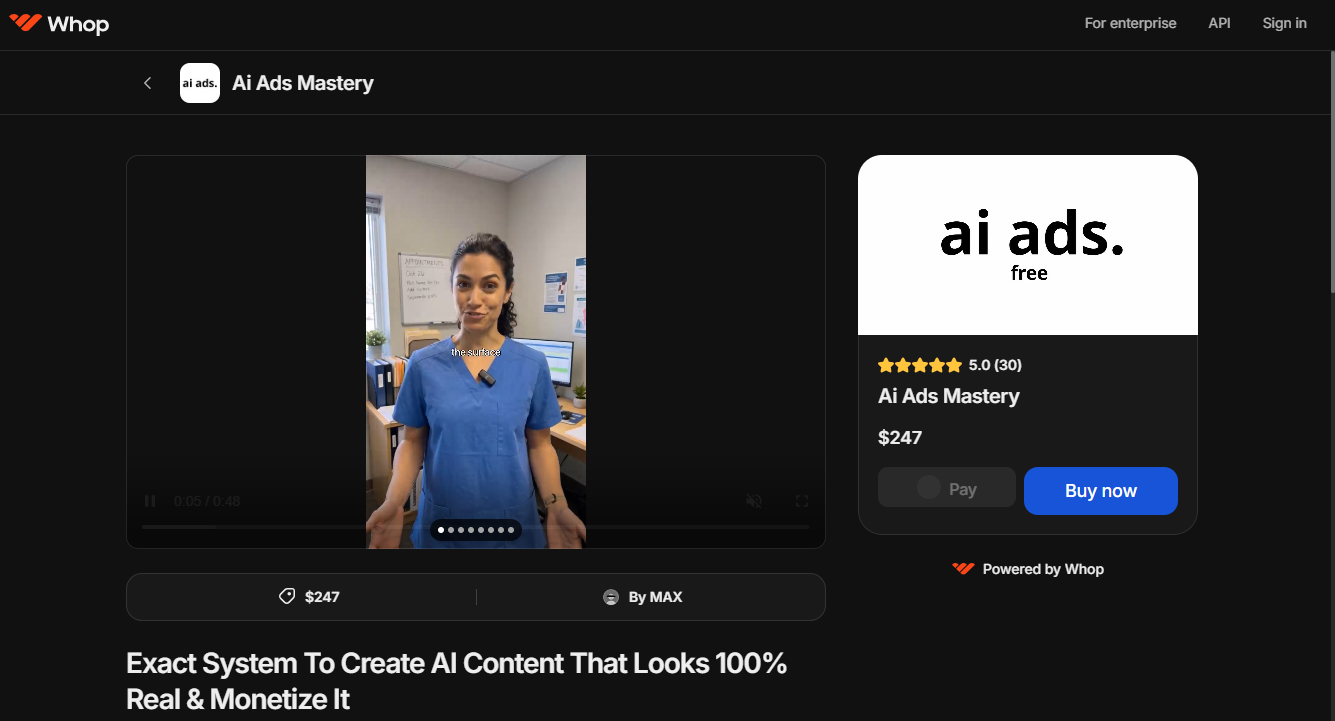

Max – Ai Ads Mastery 5d – Exact System To Create AI Content That Looks 100% Real & Monetize It: An Honest, In-Depth Review
The digital marketing landscape has undergone a seismic shift. Static images and traditional stock footage no longer grab user attention the way they used to, while hiring creative teams for high-end ad production remains prohibitively expensive for solo entrepreneurs and small businesses. Enter Max – Ai Ads Mastery 5d, a structured curriculum designed to bridge the gap between simple generative AI tools and high-converting, commercial-grade digital advertising.
This review cuts through the marketing hype to analyze what the system actually delivers, who it is built for, and whether its claims of creating hyper-realistic media and monetizing it effectively hold up in practice.
What Is the System and What Does It Promise?
At its core, this training program is structured as an intensive 5-day framework focused on two main objectives: mastering advanced visual generative AI and converting those assets into measurable revenue. Rather than relying on simple text prompts that yield uncanny, synthetic-looking outputs, the workflow emphasizes precise control over image and video parameters.
The primary promise of the framework centers on defeating the “AI look”—that overly smooth, plastic aesthetic that causes modern social media users to immediately scroll past an advertisement. By combining specific prompting techniques, visual conditioning tools, and targeted monetization strategies, the course aims to turn raw synthetic generation into an automated digital media engine.
Core Breakdown: The 5-Day Structure
The program breaks down its training into five progressive modules designed to take a practitioner from foundational setups to active revenue generation.
┌─────────────────────────────────────────────────────────┐
│                     5-DAY CURRICULUM                    │
├──────────┬──────────────────────────────────────────────┤
│ Day 01   │ Foundation & Model Calibration               │
├──────────┼──────────────────────────────────────────────┤
│ Day 02   │ Prompt Engineering & Photorealism            │
├──────────┼──────────────────────────────────────────────┤
│ Day 03   │ Dynamic Motion & AI Video Synthesis          │
├──────────┼──────────────────────────────────────────────┤
│ Day 04   │ Ad Crafting & Conversion Copywriting         │
├──────────┼──────────────────────────────────────────────┤
│ Day 05   │ Monetization Models & Scale                  │
└──────────┴──────────────────────────────────────────────┘
Day 1: Foundation & Model Calibration
The initial module focuses on environment setup and tool selection. Instead of relying solely on entry-level interfaces, it covers model weights, aspect ratio controls, seed retention, and camera angle settings.
-
Learning proper lighting terminology (e.g., volumetric lighting, aperture values, rim lighting).
-
Establishing consistent character control across multiple generations.
-
Setting up base workflows in Midjourney, Stable Diffusion, or similar state-of-the-art generators.
Day 2: Advanced Prompt Engineering for Photorealism
Day two tackles the technical mechanics of defeating visual artifacts. The focus shifts toward textures, micro-details, skin imperfections, and natural lighting.
-
Eliminating plastic textures and unnatural reflections.
-
Using negative prompts effectively to clean up composition.
-
Matching photographic styles to specific commercial niches (beauty, fitness, SaaS, ecommerce).
Day 3: Dynamic Motion and Video Synthesis
Static images only cover half of modern ad performance. Day three transitions into AI video generation, turning still concepts into high-engagement video ads.
-
Applying image-to-video diffusion techniques.
-
Managing frame consistency and avoiding unwanted warping artifacts.
-
Pairing visuals with AI voice synthesis and automated lip-sync tools.
Day 4: Ad Crafting, Hooks, and Direct Response Copy
A hyper-realistic image means little if it does not convert. Day four links high-quality imagery to direct-response marketing principles.
-
Creating pattern-interrupt visual hooks for TikTok, Instagram Reels, and YouTube Shorts.
-
Structuring ad angles around target demographic pain points.
-
Integrating custom AI copy frameworks to write compelling ad scripts.
Day 5: Monetization Frameworks and Execution
The final module covers turning these skills into sustainable income streams.
-
Agency Services: Offering visual ad creation to local businesses and e-commerce brands.
-
Affiliate Marketing: Running high-converting native ad campaigns without showing your face.
-
Faceless Brand Channels: Building organic content channels that scale using automated media pipelines.
Features vs. Real-World Utility
To evaluate the true value of the system, it helps to look at how its primary claims compare against practical execution in today’s ad market.
Key Strengths of the Framework
1. Focus on Practical Monetization, Not Just Art
Many digital courses focus purely on art generation, teaching users how to create impressive fantasy landscapes or stylized portraits. This framework sets itself apart by focusing entirely on commercial application. Every prompt and workflow taught is aimed directly at producing conversion-focused media meant to sell products or services.
2. Solving the “Uncanny Valley” Problem
The biggest challenge with using synthetic media in paid advertising is consumer trust. When an ad looks visibly artificial, engagement drops. The program places heavy emphasis on introducing natural noise, lens imperfections, real-world skin grain, and candid camera angles, making the visual assets blend seamlessly into organic social feeds.
3. Actionable Tool Agnosticism
While specific engines are demonstrated, the underlying principles—such as camera placement, prompt weight distribution, lighting physics, and marketing psychology—apply across almost any top-tier media generator, ensuring the skills stay relevant even as underlying software updates.
Areas That Require Caution
-
Learning Curve for Absolute Beginners: While marketed as a streamlined system, users who have never touched an AI generator or digital ad dashboard may find the technical terminology on Day 1 and Day 2 challenging.
-
Rapidly Changing Toolkits: Generative software evolves at a breakneck pace. While core direct-response marketing principles remain stable, specific UI layouts and interface buttons taught in video demonstrations inevitably shift over time.
-
Ad Network Compliance: Running synthetic ads on major platforms like Meta, TikTok, and Google requires strict adherence to disclosure rules and policy guidelines, particularly regarding claims and realistic endorsements. Practitioners must stay aware of policy updates.
Who Is This System Best Suited For?
-
E-Commerce Store Owners: Brands looking to generate endless variations of product placement shots and UGC-style (User Generated Content) video ads without shipping physical items to influencers.
-
Affiliate Marketers: Marketers who need high-converting creative assets quickly to test angles across multiple niches without incurring high production costs.
-
Digital Marketing Agencies: Media buyers and creative directors wanting to speed up their team’s ad testing pipelines while lowering asset production overhead.
-
Freelancers & Content Creators: Solo operators looking to offer high-end visual media creation services to clients as a specialized agency offer.
Final Verdict
The Max – Ai Ads Mastery 5d program delivers a practical, highly focused roadmap for marketers looking to leverage modern generative technology. By pairing advanced visual prompt engineering with classic direct-response advertising principles, it addresses the two biggest hurdles in modern media creation: visual quality and profitability.
While it is not a “push-button” solution—mastering character consistency and nuance still requires hands-on experimentation—the framework offers a structured, step-by-step methodology that replaces guesswork with a repeatable media creation process. For digital marketers and brand owners seeking to reduce content creation costs while maintaining high ad conversion rates, this system proves to be a solid, highly actionable resource.
Be the first to review “Max – Ai Ads Mastery 5d – Exact System To Create AI Content That Looks 100% Real & Monetize It”
Related products

Uncategorized
Uncategorized



Uncategorized


Uncategorized

Reviews
There are no reviews yet.