

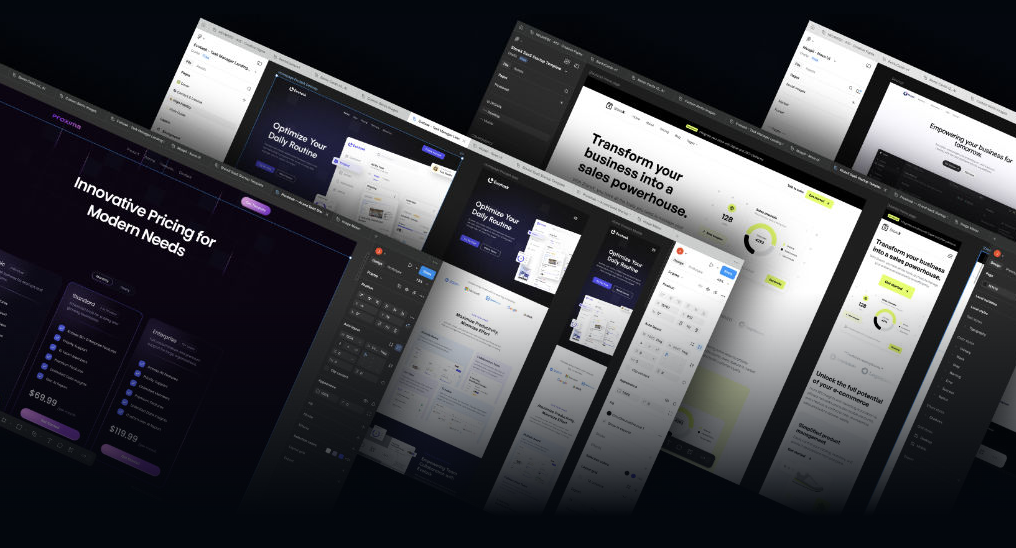


Lytbox – Figma Mastery For Web Designers Review: Is It Worth It?
If you are a web designer looking to level up your workflow, ditch clumsy design handoffs, and create production-ready layouts that developers actually enjoy building, you have likely run into Lytbox – Figma Mastery For Web Designers. In an industry saturated with basic tutorials that merely show you how to move rectangles around a canvas, finding a comprehensive curriculum focused on professional web design architecture is rare.
This in-depth review breaks down everything you need to know about Lytbox – Figma Mastery For Web Designers. We will explore its core modules, curriculum depth, target audience, pros and cons, and whether it delivers on its promise to transform your Figma proficiency from intermediate to elite.
What Is Lytbox – Figma Mastery For Web Designers?
Lytbox – Figma Mastery For Web Designers is an advanced educational program designed specifically for digital designers, UI/UX professionals, and freelancers who want to master Figma at an enterprise level. Rather than focusing solely on aesthetic UI design, the course bridges the gap between creative visual design and technical implementation.
Figma has become the industry standard for digital product design, but many designers only utilize a fraction of its capabilities. They rely on manual resizing, messy layer panels, and inconsistent spacing systems. Lytbox addresses these inefficiencies head-on, teaching students how to build scalable design systems, leverage advanced Auto Layout, and construct robust components that behave like real front-end code.
Who Created Lytbox – Figma Mastery?
The course is built by industry professionals who spend their days building high-converting websites and scalable design systems for modern tech companies and agencies. Their approach reflects real-world agency workflows rather than theoretical design school concepts. Every lesson is structured around solving the actual bottlenecks that slow designers down during client projects and team collaborations.
Core Curriculum Breakdown: What’s Inside?
The curriculum is meticulously organized into logical modules that take you from foundational structure to advanced prototyping and developer handoff.
1. Advanced Auto Layout & Responsive Architecture
The foundation of modern web design in Figma is Auto Layout. If you are still hard-coding widths or manually grouping elements, your designs will break on different viewports.
-
Mastering Nested Layouts: Learn how to combine vertical and horizontal frames to create fluid, responsive components.
-
Min/Max Widths & Wrapping: Discover how to utilize advanced constraints so your components scale naturally across desktop, tablet, and mobile breakpoints without manual intervention.
-
Real-World Component Building: Build buttons, navigation bars, and cards that expand, wrap, and adapt dynamically to changing text lengths.
2. Scalable Design Systems & Token Management
A great designer builds beautiful pages; an elite designer builds systems that scale. This module teaches you how to structure a design system from scratch.
-
Global Styles & Variables: Leverage Figma variables for colors, typography, spacing, and numbers to manage dark and light modes effortlessly.
-
Component Variants & Properties: Create clean, maintainable component libraries with boolean, instance swap, and text property overrides.
-
Naming Conventions: Establish strict organizational naming protocols that keep your asset panels clean and easy for your entire team to navigate.
3. Wireframing to High-Fidelity UI Workflows
Speed is critical in client work. This section focuses on accelerating your ideation and layout phase.
-
Grid Systems & Layout Grids: Set up 12-column grids, baseline grids, and fluid container widths that align with modern CSS frameworks like Tailwind and Bootstrap.
-
Reusable Section Templates: Build a personal library of landing page sections (hero units, feature grids, pricing tables, testimonials) to cut your project turnaround time in half.
-
Typography Hierarchies: Establish modular type scales that look pristine across all devices.
4. Advanced Prototyping & Micro-Interactions
Static mockups are no longer enough to win clients or communicate complex UI states.
-
Smart Animate Mechanics: Learn how to create butter-smooth transitions between frames without third-party plugins.
-
Interactive Components: Build toggles, dropdown menus, tabs, and carousels directly inside your main component sets.
-
Conditional Logic & Variables: Test complex user flows with prototype variables that remember user input and state changes.
5. Developer Handoff & Production Readiness
The ultimate test of a design file is how easy it is for a developer to turn into clean HTML, CSS, or React components.
-
Inspection Hygiene: Clean up messy layer trees, remove redundant frames, and ensure your layout structure mirrors clean semantic HTML.
-
Design Tokens Export: Learn how to bridge Figma variables directly into code repositories using modern tokens and plugins.
-
Documentation Standards: Write clear notes, usage guidelines, and state variations directly within your Figma files.
Key Pros and Cons
The Pros
-
Extremely Practical: Every lesson is grounded in real-world agency projects rather than abstract theory.
-
Future-Proof Techniques: Covers the latest Figma updates, including variables, conditional prototyping, and advanced Auto Layout properties.
-
Saves Hours of Work: The design system and component architecture strategies drastically reduce repetitive manual adjustments.
-
Improves Dev Collaboration: Developers will love you for clean, structured files that translate seamlessly into code.
The Cons
-
Not for Absolute Beginners: If you have never opened Figma before, the fast-paced nature of the advanced modules may feel overwhelming. Basic familiarity with the tool is required.
-
Investment Required: Like any premium educational resource, it requires a financial investment, though the time saved on projects pays for it quickly.
Who Is This Course Best For?
-
Freelance Web Designers: Anyone looking to speed up their client delivery times, increase their pricing confidence, and deliver agency-grade deliverables.
-
UI/UX Designers: Professionals transitioning from sketch or older versions of Figma who want to master modern component-driven workflows.
-
Agency Teams: Design leads wanting to standardize their team’s file structures and handoff processes to eliminate friction with developers.
Final Verdict: Is Lytbox Worth It?
If you want to move past the amateur phase of web design where every page is built from scratch and every screen size requires manual tweaking, Lytbox – Figma Mastery For Web Designers is an exceptional investment. It transforms Figma from a simple drawing tool into a powerful engineering environment that empowers you to design faster, cleaner, and smarter.
For professionals serious about mastering digital product design architecture, this course delivers tremendous value and immediately elevates the quality of your output.
Be the first to review “Lytbox – Figma Mastery For Web Designers”
Related products
Uncategorized

Uncategorized
Zakaria Airakaz – Ecom Masterclass (Up to August 2026) – The Complete $100K/Day System

Uncategorized


Uncategorized


Uncategorized

Uncategorized
Reviews
There are no reviews yet.