

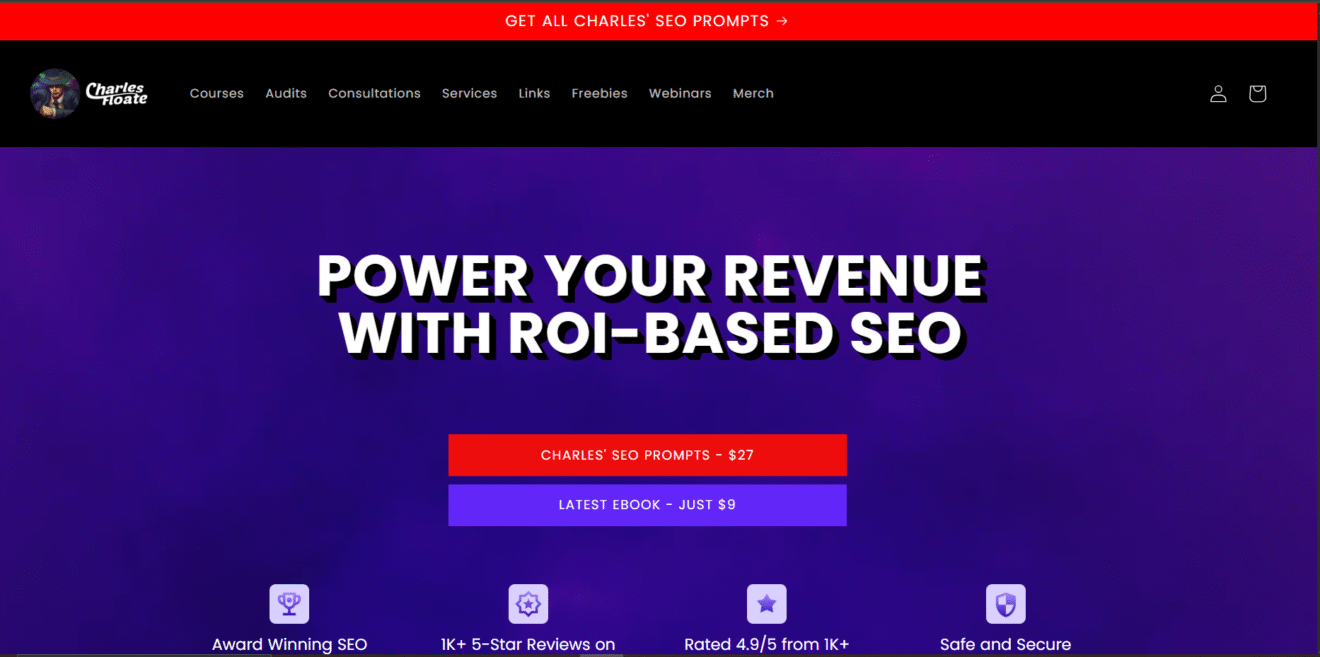


Charles Floate Training – SEO Prompts 2025 Review: Is It Worth It?
The search engine optimization landscape is shifting faster than ever. With rapid AI updates, volatile search algorithm shifts, and generative engine overviews, traditional SEO tactics are becoming obsolete. Marketers and site owners need reliable workflows to scale content, analyze technical data, and maintain rankings without burning hundreds of hours on manual execution.
Enter Charles Floate Training – SEO Prompts 2025, a specialized collection of frameworks designed to leverage artificial intelligence for high-level search campaigns. Charles Floate, a well-known and often outspoken figure in the digital marketing space, has built a reputation on black-hat, gray-hat, and ultra-scalable affiliate SEO strategies.
In this comprehensive, honest review, we dissect what is included in this updated prompt library, evaluate its real-world practical utility, weigh the pros and cons, and determine whether it delivers real ROI for modern SEO practitioners.
What Is Charles Floate Training – SEO Prompts 2025?
At its core, this training program is an actionable repository of custom-built AI prompts specifically tailored for modern search engine optimization. Rather than offering basic, generic prompts like “write a 1,000-word blog post about X,” this resource focuses on structured, multi-step engineering prompts designed to yield sophisticated outputs from LLMs (Large Language Models) such as ChatGPT, Claude, and Google Gemini.
The course aims to bridge the gap between basic generative AI usage and high-tier, programmatic execution. It targets serious affiliate marketers, agency owners, and niche site creators who want to automate tedious research, data extraction, and content scaling tasks without sacrificing strategy or search intent precision.
What’s Inside the Training Program?
The training is structured into several modular core sections, each focusing on a distinct phase of a search marketing campaign:
1. Advanced Keyword Research & Intent Clustering
-
Intent Mapping: Prompts designed to categorize thousands of raw keywords by explicit user intent (informational, transactional, commercial investigation).
-
Topical Authority Blueprints: Templates that map out entire siloes and cluster architectures to maximize semantic coverage across a niche.
-
Low-Hanging Fruit Extraction: Workflows that take Search Console data exports and highlight quick-win optimization opportunities.
2. Technical SEO & Schema Automation
-
Structured Data Generation: Complex prompts that convert unstructured web pages into fully valid JSON-LD code for custom Schema markup (FAQ, Product, HowTo, Organization).
-
Internal Link Auditing: AI-driven scripts that analyze existing site maps to suggest contextual internal linking opportunities.
-
Log File & Crawl Analysis Interpretation: Prompt frameworks that assist in summarizing crawl issues and log data into simple actionable tasks.
3. High-Converting Content Engineering
-
Semantic NLP Content Outlines: Outlines engineered to match the top-ranking entities and LSI terms required to satisfy modern search engines.
-
On-Page Optimization Prompts: Frameworks designed to refine existing content, improve readability, tighten keyword placement, and refresh aging articles.
-
E-E-A-T Signal Enhancement: Tailored prompts to add author credentials, expert citations, and trust indicators across informational content.
4. Link Building & Outreach Workflows
-
Prospecting & Personalization: Systems that analyze target prospect sites to output custom outreach emails that avoid looking automated.
-
Guest Post Frameworks: Prompts that generate high-converting pitch ideas based on a target publication’s top-performing topics.
-
Anchor Text Profile Planning: Workflows designed to calculate safe anchor text distributions for gray-hat or aggressive link campaigns.
Key Features & Practical Utility
What Sets This Course Apart From Generic AI Guides?
The main drawback of most public prompt databases is their superficial nature. Basic prompts often lead to generic, repetitive content that gets ignored by readers and flagged by quality algorithms.
This program differs in a few crucial ways:
-
Role-Based Framing: The prompts utilize system instructions, forcing the language model to adopt precise roles (e.g., senior technical auditor, expert affiliate editor).
-
Sequential Chaining: Instead of one-off queries, the training teaches prompt chaining—feeding the output of step one into step two to create deeply nuanced strategy deliverables.
-
Focus on Efficiency: Every framework is designed around speed and scale, aiming to reduce hours of manual labor down to minutes.
Pros and Cons: An Honest Evaluation
To make an informed decision, it helps to look at where this training excels and where it falls short.
The Pros
-
Time-Saving Efficiency: Reduces routine tasks—such as keyword categorization, outline creation, and schema generation—to simple copy-and-paste commands.
-
Direct, Actionable Focus: Lacks fluff and prolonged theoretical explanations; you receive functional prompts that can be implemented immediately.
-
Modern Relevance: Updated specifically for current search environments, focusing heavily on semantic context and topical coverage over outdated keyword-density metrics.
-
Versatility Across Platforms: Built to work smoothly across OpenAI’s ChatGPT-4o, Claude 3.5 Sonnet, and Gemini Advanced without requiring vendor lock-in.
The Cons
-
Requires Base Knowledge: Beginners with zero prior experience in SEO may struggle to verify whether the AI output is accurate or logically sound.
-
Human Oversight Essential: AI models still experience hallucinations. Users cannot blindly publish the raw output without manual editing and fact-checking.
-
Unapologetic Style: Charles Floate’s direct, aggressive marketing style may not appeal to corporate or strictly white-hat enterprise teams.
Who Is This Training Ideal For?
-
Affiliate Marketers: People running multiple niche sites who need to produce structured content, cluster keywords, and build out authority quickly.
-
SEO Agency Professionals: Teams looking to streamline deliverable creation, client reporting outlines, and technical audits.
-
Freelance SEO Specialists: Consultants looking to increase their capacity and handle more clients by leveraging AI workflows.
-
In-House Content Teams: Writers and editors seeking to build search-optimized outlines backed by sound semantic structure.
Final Verdict: Is It Worth Buying?
If you are looking for a magic button that completely automates your websites without any human effort, this training is not a silver bullet. AI tools require skilled direction, critical thinking, and quality control to yield long-term search success.
However, if you already understand core SEO principles and want an efficient, battle-tested library of advanced AI prompts to scale your operations, Charles Floate Training – SEO Prompts 2025 is a solid resource. It saves significant trial-and-error time, eliminates tedious manual workflows, and provides a structured strategy for using generative AI effectively in modern search campaigns.
Final Score: 4.2 / 5
Recommendation: Recommended for intermediate-to-advanced SEO practitioners, affiliate site owners, and agency operators who want to systematically integrate AI into their workflows.
Be the first to review “Charles Floate Training – SEO Prompts 2025”
Related products

Uncategorized


Uncategorized

Uncategorized

Uncategorized

Uncategorized

Uncategorized
Reviews
There are no reviews yet.