

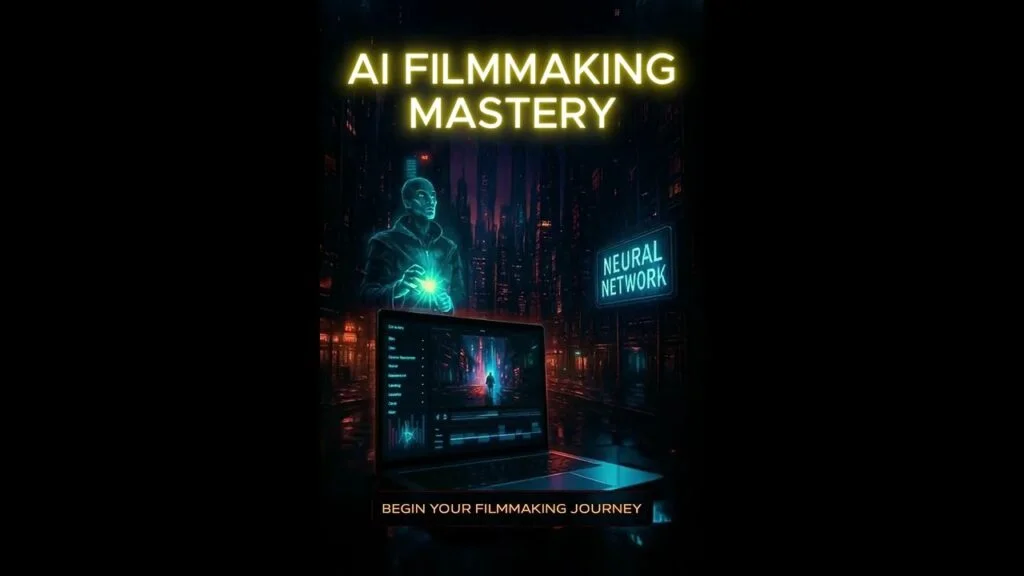


Beau W. Green – AI Filmmaking Mastery: An Honest and Comprehensive Review
The intersection of artificial intelligence and digital cinema has shifted from a novel experiment into an essential industry evolution. Aspiring directors, video editors, content creators, and visual artists are increasingly leveraging AI tools to accelerate pre-production, render high-fidelity concept art, generate cinematic motion clips, and streamline post-production workflows. Among the leading educational offerings designed to navigate this revolution is Beau W. Green – AI Filmmaking Mastery.
This comprehensive review dives deep into the course structure, curriculum depth, practical applications, and overall value proposition of Beau W. Green’s masterclass. Whether you are a traditional filmmaker wanting to integrate modern generative tools or a digital creator aiming to produce studio-grade cinematic visuals on an indie budget, this honest evaluation will help you determine if this program is the right fit for your creative journey.
What Is Beau W. Green – AI Filmmaking Mastery?
Beau W. Green – AI Filmmaking Mastery is an intensive, step-by-step training program designed to teach creators how to conceptualize, direct, and produce film-quality video content using state-of-the-art artificial intelligence platforms. Created by director and visual creator Beau W. Green, the program bridges the gap between technical AI prompt engineering and traditional cinematic storytelling techniques.
Rather than treating AI software as a series of isolated tricks, the course focuses on an end-to-end production pipeline. Students learn how to transform raw ideas into structured screenplays, craft consistent visual assets, convert still images into dynamic motion shots, synchronize audio, and assemble finished cinematic projects ready for distribution.
Key Course Modules and Core Curriculum
The curriculum of Beau W. Green – AI Filmmaking Mastery is organized logically to mimic a professional film production timeline: pre-production, visual style development, motion generation, audio design, and post-production editing.
1. Pre-Production & Narrative Conceptualization
Every great film begins with a solid story foundation. The introductory modules guide students through utilizing generative language models to brainstorm narrative arcs, write compelling loglines, and draft full script outlines.
-
Scriptwriting & Storyboarding: How to write AI prompts that output structured cinematic scripts with scene descriptions, camera directions, and character dialogue.
-
Creative Direction: Developing unique visual themes, color palettes, and mood boards before generating single image assets.
2. Cinematic Image Generation & Style Consistency
One of the greatest challenges in AI video creation is maintaining visual consistency across scenes. This section tackles asset generation using industry-leading image creation tools like Midjourney and Stable Diffusion.
-
Camera Angles & Lighting: Master prompts for camera lenses (e.g., 35mm, 85mm anamorphic), focal lengths, depth of field, and volumetric lighting.
-
Character & Environment Consistency: Techniques for reproducing the same character face, costume, and environmental setting across multiple generated camera angles.
3. Motion Generation & Video Synthesis
Static images are brought to life through advanced image-to-video and text-to-video engines such as Runway, Pika Labs, and Luma Dream Machine.
-
Controlling Camera Movement: Executing precise pans, tilts, zooms, and drone tracking shots using motion prompts and motion brush tools.
-
Temporal Coherence: Eliminating unwanted artifacts, flickering, and unintended morphing during video generation.
4. AI Sound Design, Voiceover, & Score
Visuals represent only half of the cinematic experience. The course details how to construct high-fidelity audio landscapes using specialized generative sound tools.
-
Voice Cloning & Dialogue: Utilizing ElevenLabs to generate natural, emotionally expressive voiceovers and multi-character dialogue tracks.
-
SFX & Music Generation: Creating custom cinematic soundtracks and background environmental ambience to match scene pacing.
5. Assembly, Editing, & Upscaling
The final modules cover integrating AI outputs into traditional non-linear editing systems (NLEs) like DaVinci Resolve, Premiere Pro, or Final Cut Pro.
-
Resolution Upscaling: Enhancing lower-resolution AI video clips to crisp 4K visual quality.
-
Color Grading & Final Polish: Harmonizing disparate AI clips with unified color profiles, sound mixing, and seamless transitions.
Standout Features of the Course
Several key aspects set Beau W. Green – AI Filmmaking Mastery apart from generic online video tutorials:
-
Focus on Cinematic Intent: The course prioritizes narrative value and cinematic aesthetics over random, gimmick-driven prompt outputs.
-
End-to-End Workflow: It covers the entire lifecycle of a short film, music video, or commercial spot from start to finish.
-
Actionable Prompt Frameworks: Students receive structured prompt formulas that can be tailored to various genres, including sci-fi, horror, documentary, and period drama.
-
Regular Updates: As generative AI models rapidly evolve, course material is updated to reflect new software features, parameter changes, and emerging platforms.
Who Should Enroll in This Program?
This course is designed for a diverse spectrum of visual storytellers looking to leverage next-generation toolkits:
-
Indie Filmmakers: Directors and producers who want to create high-concept pitch trailers, mood reels, or full short films without massive production budgets.
-
Content Creators & YouTubers: Creators aiming to elevate their video production quality, visual effects, and storytelling efficiency.
-
Digital Marketers & Agency Owners: Professionals needing to produce cinematic video advertisements, product visuals, and social media media rapidly.
-
Concept Artists & Animators: Visual artists looking to expand their skill sets into motion graphics and dynamic storyboarding.
Pros and Cons
To provide a balanced perspective, here are the primary strengths and potential drawbacks of the course:
Pros
-
Structured Learning Path: Eliminates months of trial-and-error by providing a clear roadmap through complex software ecosystems.
-
High Production Quality: Lessons are clearly articulated, professionally edited, and demonstrated with real-world project files.
-
Practical Story-First Approach: Keeps story, pacing, and visual cohesion at the center of the creative process.
-
Time Efficiency: Significantly reduces the turnaround time required to create cinematic concept pieces.
Cons
-
Software Subscription Costs: Students must account for recurring subscription fees for third-party tools like Midjourney, Runway, and ElevenLabs.
-
Rapidly Changing Tech Landscape: Specific user interfaces and software parameters can update quickly, requiring users to stay adaptable alongside course updates.
Final Verdict: Is Beau W. Green – AI Filmmaking Mastery Worth It?
If you are serious about mastering the new wave of creative production technology, Beau W. Green – AI Filmmaking Mastery delivers immense value. It goes far beyond basic prompt listings to teach the foundational principles of visual direction, consistency, and post-production finishing.
By framing AI tools as a creative force multiplier rather than a replacement for artistic vision, Beau W. Green has constructed a blueprint that empowers creators to tell ambitious, visually stunning stories that were previously out of reach for independent budgets. For anyone ready to embrace the future of visual media, this course serves as a comprehensive, highly recommended investment.
Be the first to review “Beau W. Green – AI Filmmaking Mastery”
Related products


Uncategorized
Uncategorized
Uncategorized

Uncategorized

Uncategorized
Zakaria Airakaz – Ecom Masterclass (Up to August 2026) – The Complete $100K/Day System

Uncategorized
Reviews
There are no reviews yet.