

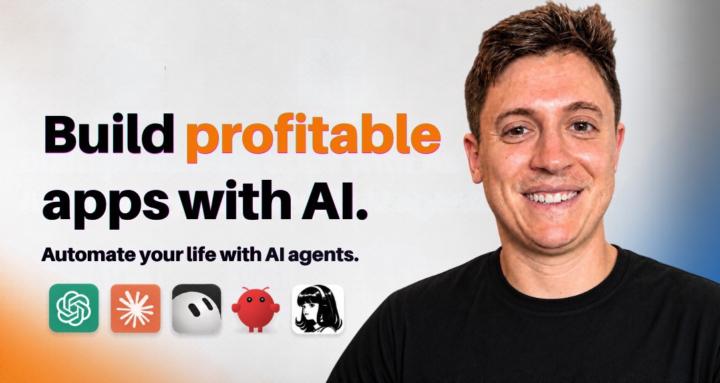


Alex Finn – Vibe Coding Academy Review: Is It Worth It?
The digital landscape is shifting rapidly. With the explosion of advanced AI models like Claude, GPT-4o, and specialized developer agents, the barrier to building software has effectively collapsed. You no longer need a traditional computer science degree or years of grueling syntax memorization to bring a software idea to life. This exact paradigm shift has given rise to a new philosophy often called “vibe coding”—where human creativity, clear vision, and prompt engineering steer the ship, while AI writes the code.
At the forefront of this movement is Alex Finn, a prominent tech creator and entrepreneur known for popularizing AI-driven workflows. His latest offering, the Alex Finn – Vibe Coding Academy, aims to teach everyday creators, entrepreneurs, and aspiring builders how to leverage AI tools to build real, functional software products without getting bogged down by traditional coding bottlenecks.
If you are wondering whether this program lives up to the hype, this in-depth, honest review breaks down everything you need to know about the curriculum, who it is for, its pros and cons, and whether it deserves your investment.
What is Vibe Coding?
Before diving into the academy itself, it is essential to understand the core philosophy behind it. Traditional coding requires learning programming languages, setting up complex local development environments, managing packages, and painstakingly debugging syntax errors line by line.
“Vibe coding,” by contrast, flips the script. Instead of acting as a traditional programmer, you act as the Product Manager or Chief Technology Officer. You set the vision, define the user experience, and guide the AI through natural language prompts. When an error occurs, you simply feed the error log back into the AI and ask it to fix it.
The Alex Finn – Vibe Coding Academy is designed to take students from absolute beginners with zero coding experience to confident creators who can rapidly prototype, build, and launch full-stack web applications using state-of-the-art AI tooling.
Core Curriculum Breakdown
The academy is structured to take learners through a logical progression, moving from foundational mindset shifts all the way to deploying production-ready applications.
1. The AI-First Mindset and Tool Stack Setup
-
Ditching Traditional Barriers: Learning how to stop thinking like a programmer and start thinking like a product architect.
-
Mastering the Modern Tool Stack: Deep dives into the essential AI developer tools, including Cursor, Claude 3.5 Sonnet, v0, Bolt.new, and GitHub integration.
-
Environment Optimization: Setting up your workspace for maximum velocity so you can transition from an idea to a working prototype in minutes instead of weeks.
2. Prompt Engineering for Software Architecture
-
Context Management: How to feed codebases, documentation, and design systems to AI models so they produce accurate, production-grade output without hallucinating.
-
Iterative Building: Breaking down massive, complex software ideas into manageable, bite-sized prompts that AI can execute flawlessly.
-
Debugging Like a Pro: Learning how to troubleshoot AI errors, interpret terminal logs, and steer the AI back on track when it goes off course.
3. Frontend Design and User Experience
-
Building Beautiful UIs Instantly: Utilizing modern styling frameworks (like Tailwind CSS) and AI design generators to create sleek, responsive, and modern user interfaces.
-
Component-Driven Development: Guiding AI to build reusable components, responsive navigation bars, dashboards, and landing pages that look professionally designed.
4. Backend Logic, Databases, and Authentication
-
Connecting the Pieces: How to integrate backend services, user authentication (Supabase, Firebase, Clerk), and databases without writing manual SQL queries or server configurations.
-
API Integrations: Tying in third-party services like payment gateways (Stripe), email providers, and external data sources using AI assistance.
5. Deployment and Launch Strategies
-
Going Live: Pushing your locally generated app to production platforms like Vercel, Netlify, or custom domains.
-
Monetization and Scaling: Strategies for turning your AI-built prototypes into viable micro-SaaS products, client deliverables, or internal business tools.
Who Is This Course For?
The Alex Finn – Vibe Coding Academy is not meant for senior software engineers looking to optimize low-level compiler algorithms. Instead, it is tailor-made for specific audiences:
-
Solopreneurs and Founders: Individuals who have great business ideas and want to build their own MVPs (Minimum Viable Products) quickly and cheaply without hiring an expensive external development agency.
-
Content Creators and Marketers: Professionals looking to build custom tools, interactive landing pages, or utility software to engage their audiences and grow their brands.
-
Non-Technical Professionals: Anyone who has felt locked out of the tech economy because they didn’t know how to code, but wants to harness the power of AI to build real digital assets.
-
Product Managers: People who want to deepen their understanding of rapid prototyping to test hypotheses and validate product-market fit at lightning speed.
The Pros and Cons
Every educational program has its unique strengths and limitations. Here is an honest look at both sides of the Vibe Coding Academy:
The Pros
-
Extremely Practical: The curriculum focuses heavily on action. You aren’t just watching theory; you are building real, functional projects from day one.
-
Saves Time and Money: By learning how to build software yourself using AI, you can bypass thousands of dollars in freelance development costs.
-
Future-Proof Skillset: AI coding tools are evolving at a breakneck pace. Learning how to direct AI effectively is arguably the most valuable leverage skill of the decade.
-
Clear, Engaging Instruction: Alex Finn is known for breaking down complex technological concepts into digestible, highly actionable insights.
The Cons
-
Rapidly Changing Landscape: Because AI tools update weekly, some specific interface tutorials or tool features may require personal adaptation as software platforms evolve.
-
Requires Active Problem-Solving: While AI writes the code, you are still responsible for the logic and direction. It requires patience and clear communication.
-
Not for Deep Computer Science Theory: If you are looking to master data structures, memory management, or low-level algorithm design, this is not the right course.
Pricing and Value Assessment
When evaluating the cost of the Alex Finn – Vibe Coding Academy, you have to look at the alternative. Hiring a freelance developer to build a simple web application or SaaS MVP can easily cost anywhere from $3,000 to $10,000+.
Learning how to build these applications yourself in a fraction of the time fundamentally changes your economic leverage. For anyone serious about launching digital projects, building micro-SaaS businesses, or adding high-value prototyping skills to their resume, the return on investment is exceptionally high.
Final Verdict: Is It Worth It?
The Alex Finn – Vibe Coding Academy captures the exact pulse of modern software creation. We are living through a historic transition where natural language has become the ultimate programming language.
If you want to stop standing on the sidelines watching other people build software businesses, and you want a structured, clear roadmap to turn your own ideas into reality using AI, this academy is a fantastic investment. It cuts through the noise, provides a modern workflow, and empowers you to build with absolute confidence.
Be the first to review “Alex Finn – Vibe Coding Academy (August 2026)”
Related products
Uncategorized

Uncategorized
Uncategorized

Uncategorized

Uncategorized
Uncategorized


Uncategorized
Reviews
There are no reviews yet.