

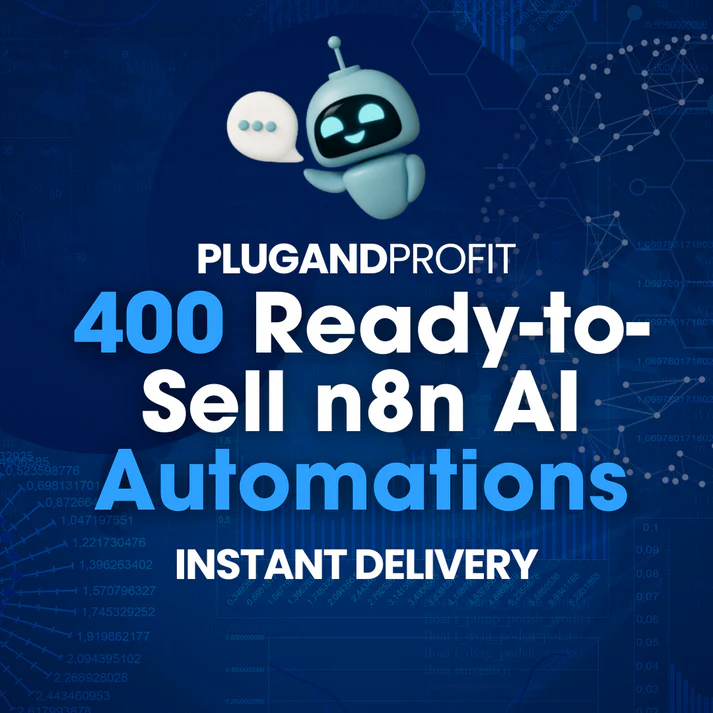


400 Ready to Sell n8n Automations Review: Is This Workflow Bundle Worth It?
The digital product landscape is shifting rapidly. Today, business owners, agencies, and tech-savvy freelancers are constantly looking for ways to streamline operations without building complex systems from scratch. Workflow automation has moved from a nice-to-have luxury to a core operational requirement.
Enter open-source automation platforms like n8n. Known for its powerful node-based visual workflow builder, n8n allows users to connect apps, build logic, and handle complex data transformations at a fraction of the cost of legacy tools like Zapier or Make. However, building custom workflows still requires time, testing, and technical know-how.
This has created a surge in demand for pre-built automation packages. Promising an instant collection of usable, client-ready blueprints, the 400 Ready to Sell n8n Automations package claims to offer a turnkey digital product library. Whether you want to implement these workflows in your own operations or white-label and resell them to clients, this bundle positions itself as an all-in-one solution.
In this review, we examine what this package actually provides, how easy it is to deploy, who benefits most, and whether it delivers on its promises.
What is the 400 Ready to Sell n8n Automations Package?
At its core, this package is a curated bundle of pre-designed JSON workflow templates built specifically for the n8n automation engine. Instead of configuring nodes, setting up webhook triggers, and mapping API endpoints individually, the package offers pre-tested configurations ready to import with a few clicks.
The primary appeal lies in its dual-purpose framework:
-
Internal Utility: Deploying pre-made workflows to streamline your own marketing, lead generation, customer onboarding, and content management tasks.
-
Commercial License: Packaging, customizing, or reselling these workflows directly to agency clients, small business owners, or niche audiences as specialized digital assets.
By offering a high volume of functional templates across various operational categories, the bundle attempts to lower the barrier to entry for launching an automation service or digital template store.
Key Features & Breakdown of What’s Included
When evaluating any digital asset package, quantity must be balanced against usability and relevance. The collection covers a wide spectrum of common business functions.
1. Multi-Industry Workflow Categories
The bundle is organized into core operational areas to ensure quick navigation. Key categories include:
-
Lead Generation & CRM Sync: Templates designed to capture webhooks from landing pages, validate email contacts, update records in CRM platforms, and trigger instant notification alerts on Slack or Telegram.
-
Social Media & Content Operations: Automated pipelines that pull RSS feeds, reformat content using AI tools, auto-schedule posts across platforms, and monitor brand mentions.
-
E-Commerce & Order Management: Workflows for handling post-purchase communications, abandoned cart follow-ups, inventory alerts, and customer review requests.
-
Data Scraper & ETL Pipelines: Pre-configured nodes for extracting web data, transforming JSON arrays into spreadsheet formats, and delivering automated reporting digests to team members.
2. Plug-and-Play JSON Imports
n8n makes importing workflows simple. Each automation file comes formatted in native JSON structure. You simply copy the raw code or upload the JSON file directly into your self-hosted or cloud-based n8n dashboard. Node structures, condition branches, and connection logic are pre-mapped, leaving only API keys and webhook URLs for you to configure.
3. Commercial & Agency Usage Rights
The standout value driver for agencies and digital product creators is the commercial distribution right. Rather than starting every client project from zero, developers can use these files as base frameworks. You can customize branding, alter logic branches to fit specific requirements, and deliver completed automations to clients in a fraction of the traditional development window.
How Easy Is Setup and Deployment?
Even with ready-made files, deploying automations requires basic familiarity with API credentials and node settings. Here is what the deployment process looks like in practice:
Step 1: Environment Preparation
You need an active instance of n8n. This can be hosted on n8n Cloud or self-hosted via Docker on VPS providers like Hetzner, DigitalOcean, or AWS.
Step 2: Importing the Workflow
From the dashboard, choose the import option and select the specific JSON file from the bundle. The visual interface immediately populates the full sequence of nodes, complete with triggers, filters, and output steps.
Step 3: Credential Mapping
This is where hands-on configuration occurs. Because security protocols require unique authorization tokens, you must connect your own API keys for third-party services (such as OpenAI, Google Workspace, Airtable, or Stripe).
Step 4: Testing & Execution
Run a test payload through the pipeline to verify that field mappings, conditional checks, and data formats line up correctly. Once confirmed, activate the workflow.
While the process requires an understanding of how API authorization works, it eliminates the hours typically spent mapping payload schemas and designing branching logic from scratch.
Pros & Cons
Pros
-
Drastic Time Savings: Eliminates repetitive architecture work by offering ready-built logic for common business processes.
-
Monetization Potential: Provides immediate inventory for freelancers, agency owners, or creators building a digital template storefront.
-
Diverse Application: Spans lead management, content generation, data parsing, and customer support channels.
-
Clean Open-Source Stack: Leverages n8n’s visual node setup, reducing reliance on expensive subscription-based middleware platforms.
Cons
-
Requires API Knowledge: Users still need a basic understanding of webhooks, bearer tokens, and OAuth authorization to link external services.
-
Maintenance Requirements: Third-party APIs update periodically. Users will need to monitor node credentials and update deprecated endpoints over time.
-
Varied Complexity: Some workflows are simple 3-node triggers, while others involve multi-step conditional processing requiring deeper technical context.
Who Is This Product Best Suited For?
This automation package is not a single button that passively prints revenue. It is a structured productivity toolkit that provides maximum value to specific types of users:
-
Automation Agencies & Freelancers: Agency owners looking to speed up project delivery, build reusable solution libraries, and offer quick-turnaround services to clients.
-
Digital Product Sellers: Creators looking to build niche template bundles on platforms like Gumroad, Lemon Squeezy, or Shopify.
-
SME Operations Managers: In-house team leads seeking to replace manual administrative work with automated background processes without hiring expensive integration engineers.
-
No-Code / Low-Code Builders: Developers and enthusiasts looking to study complex node arrangements and learn advanced n8n logic patterns by analyzing real-world examples.
Final Verdict: Is It Worth the Investment?
The 400 Ready to Sell n8n Automations package delivers genuine utility for anyone working within the modern workflow integration landscape. Its primary strength lies in its ability to serve both as a productivity accelerator for internal projects and as a foundational product catalog for digital asset sellers.
If you are completely new to API concepts, expect a brief learning curve around authenticating service credentials. However, for agencies, freelancers, and growth marketers looking to implement or package automation blueprints rapidly, this collection offers a practical, high-value asset library that saves hundreds of hours in development time.
Be the first to review “400 Ready to Sell n8n Automations”
Related products

Uncategorized


Uncategorized

Uncategorized

Uncategorized

Uncategorized

Uncategorized
Reviews
There are no reviews yet.