

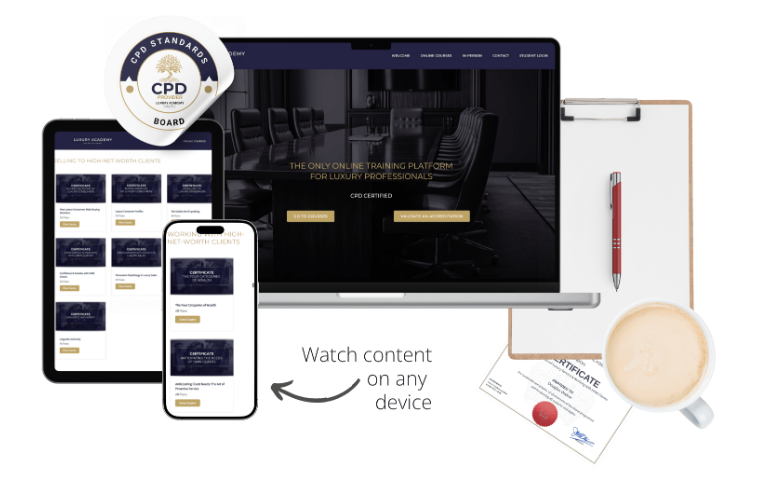


uxury Academy – Communicating With Luxury Clients Review: Is It Worth Your Investment?
Navigating the ultra-luxury sector requires a fundamentally different mindset, vocabulary, and interpersonal cadence than traditional sales or service roles. High-net-worth individuals (HNWIs) and ultra-high-net-worth individuals (UHNWIs) do not simply evaluate products or services based on features and price points. Instead, they invest in discretion, exclusivity, hyper-personalization, and seamless execution.
The online program Luxury Academy – Communicating With Luxury Clients claims to decode these intricate relational dynamics. Designed for sales executives, real estate agents, private bankers, luxury hospitality managers, and boutique advisors, this course aims to bridge the gap between standard customer service and world-class luxury relationship management.
In this comprehensive, unbiased review, we will dissect the course curriculum, assess its practical applicability, evaluate its core strengths and potential drawbacks, and determine whether it delivers real, actionable value for professionals targeting high-tier clientele.
What Is Luxury Academy – Communicating With Luxury Clients?
Luxury Academy – Communicating With Luxury Clients is a specialized professional development program tailored for individuals operating in premium markets. Created by luxury industry veterans, the course focuses on the subtle nuances of human psychology, high-stakes communication etiquette, and emotional intelligence necessary to connect with affluent buyers.
Unlike generic sales seminars that teach aggressive closing tactics, this curriculum focuses on rapport-building, non-verbal cues, tailored verbal framing, and long-term client retention. It establishes that high-end client communication is an art form rooted in respect, subtle confidence, and anticipation of client needs.
Who Is This Course Designed For?
-
Luxury Real Estate Brokers: Agents negotiating multi-million dollar residential or commercial deals.
-
Boutique Retail Specialists: Professionals working in fine jewelry, haute couture, horology, and high-end automotive industries.
-
Private Wealth Advisors & Family Office Managers: Professionals handling sensitive financial portfolios for affluent families.
-
Hospitality & Yachting Professionals: Concierges, general managers, and charter brokers aiming for flawless service standards.
-
Independent Consultants & Entrepreneurs: Service providers raising their price positioning to target premium client segments.
Comprehensive Module Breakdown
The core strength of the program lies in its structured pedagogical approach. The curriculum moves progressively from foundational psychological principles to advanced communication frameworks and real-world scenario management.
+-------------------------------------------------------------------------------+
|                        CURRICULUM ARCHITECTURE                                |
+-------------------------------------------------------------------------------+
| Module 1: The Mindset of High-Net-Worth Individuals                           |
| Module 2: The Art of Verbal & Non-Verbal Elegance                             |
| Module 3: Active Listening, Discovery & Psychological Profiling               |
| Module 4: Handling Objections & High-Stakes Negotiations Discretionary        |
| Module 5: Cultivating Long-Term Loyalty & Post-Sale Relationship Stewardship |
+-------------------------------------------------------------------------------+
Module 1: Understanding the High-Net-Worth Mindset
The introductory module deconstructs the buying behaviors and expectations of affluent clients. It dismantles common misconceptions about wealth and focuses on what luxury consumers actually value most: time, friction reduction, privacy, and authentic prestige.
Key lessons include:
-
Decoding the difference between transactional buyers and legacy-wealth decision-makers.
-
Understanding why pushy sales tactics destroy credibility instantly in the premium space.
-
Developing the internal authority and peer-level confidence required to converse with high-profile clients as an equal, rather than a subordinate.
Module 2: Verbal and Non-Verbal Elegance
Communication in the luxury sector relies heavily on subtle details. Module 2 analyzes tone, vocabulary selection, body language, and spatial awareness.
Key lessons include:
-
Eliminating filler words, overly casual jargon, and desperate sales language.
-
Mastering executive presence, posture, eye contact, and professional distance.
-
Crafting clear, elevated spoken and written communications (email etiquette, messaging protocols, and formal proposal structures).
Module 3: Advanced Discovery and Psychological Profiling
Effective luxury advisors spend significantly more time listening than speaking. This module focuses on asking strategic, open-ended questions that reveal a client’s deeper motivations, values, and unstated preferences.
Key lessons include:
-
Using subtle diagnostic questions without making the client feel interrogated.
-
Reading micro-expressions and shifts in client demeanor during presentations.
-
Tailoring recommendations precisely around a client’s aesthetic and practical priorities.
Module 4: Discretionary Negotiation and Handling Resistance
Objections in the luxury market rarely revolve around absolute cost; instead, they stem from perceived value misalignment, lack of trust, or timing issues. This module provides actionable frameworks to address resistance without compromising brand prestige or discounting prices.
Key lessons include:
-
Reframing price inquiries around long-term value, craftsmanship, and exclusivity.
-
Navigating complex negotiation dynamics calmly and diplomatically.
-
Maintaining complete discretion when managing sensitive or demanding client requests.
Module 5: Long-Term Stewardship and Client Retention
Acquiring a high-net-worth client requires significant effort, making retention vital for long-term professional success. The final module explores how to turn one-time transactions into lifetime professional relationships.
Key lessons include:
-
Designing memorable post-sale touchpoints that feel personal rather than promotional.
-
Managing privacy boundaries effectively across personal and digital channels.
-
Generating organic referrals within affluent social networks naturally.
Core Strengths: What Sets This Program Apart
1. Rejection of Pushy Sales Tactics
Standard sales training often emphasizes urgency triggers, aggressive closes, and rigid scripts. This course accurately reflects the reality of the luxury sector: affluent clients possess high radar for manipulation. The program’s emphasis on quiet confidence, consultative dialogue, and relationship-building is far more effective for high-value transactions.
2. High Practical Usability
The modules avoid dry theoretical lectures, offering concrete communication frameworks, email templates, vocabulary upgrades, and real-world case studies instead. You can immediately apply these refined phrases and listening techniques in your next client interaction.
3. Focus on Equal-Footing Authority
One of the biggest hurdles professionals face when interacting with ultra-wealthy clients is deference anxiety—acting subservient rather than authoritative. The course provides clear strategies to project calm, peer-level authority, establishing you as a trusted advisor rather than just a service vendor.
Considerations and Potential Drawbacks
While the course offers substantial value, prospective students should keep a few points in mind before enrolling:
-
Requires Active Real-World Application: The material focuses heavily on interpersonal nuances. Watching the videos alone will not transform your sales performance; you must practice the behavioral habits and linguistic shifts conscientiously in your daily client interactions.
-
Not an Industry-Specific Technical Guide: The program focuses universally on client communication skills. It does not teach technical real estate law, specific watchmaking mechanics, or investment portfolio mechanics. It is designed to complement your existing domain expertise, not replace it.
Feature & Performance Overview
Real-World Impact: How It Transforms Client Interactions
To illustrate how the training functions in practice, consider the shift in communication style across common client touchpoints:
+---------------------------------------------------------------------------------------------+
|                          BEFORE vs. AFTER TRAINING SHIFT                                    |
+---------------------------------------------------------------------------------------------+
| SCENARIO: Handling a Price Inquiry                                                          |
| Standard Approach: "We can offer a 5% discount if you sign by Friday."                     |
| Luxury Approach:   "Our pricing reflects the bespoke sourcing and uncompromising standards  |
|                    of craftsmanship involved. Let me walk you through the specifics."       |
+---------------------------------------------------------------------------------------------+
| SCENARIO: Initial Discovery Meeting                                                         |
| Standard Approach: Pitching product features immediately from a standard brochure.         |
| Luxury Approach:   Asking targeted lifestyle questions, observing unstated preferences, and |
|                    curating a customized recommendation tailored to their schedule.        |
+---------------------------------------------------------------------------------------------+
Final Verdict: Is It Worth It?
If your professional earnings depend on building trust with discerning, high-net-worth clients, Luxury Academy – Communicating With Luxury Clients is a worthwhile investment.
The program successfully demystifies the unwritten social protocols of the luxury sector. It gives service providers, sales specialists, and relationship managers the polish, linguistic precision, and poise required to navigate high-stakes environments comfortably.
By replacing pushy sales pitches with authentic consultation, emotional intelligence, and refined etiquette, this training empowers you to build lasting professional relationships, secure higher-value deals, and establish yourself as an indispensable partner to elite clients.
Final Score: 4.8 / 5 Stars — Highly recommended for ambitious professionals aiming to master the high-end marketplace.
Be the first to review “Luxury Academy – Communicating With Luxury Clients”
Related products
Uncategorized

Uncategorized

Uncategorized



Uncategorized

Uncategorized

Uncategorized
Reviews
There are no reviews yet.